Place
Santa Clarita Elementary School
Active
Local advocates rally to preserve a unique Mid-Century Modern school campus as a community space


Place Details
Address
Architect
Style
Decade
Property Type
Community
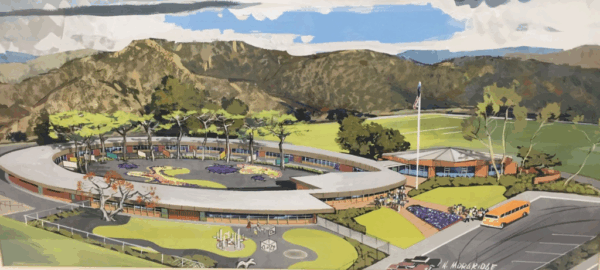
Illustrative perspective render of the school design by architecture firm Smith Powell and Morgridge | Smith Powell and Morgridge
Overview
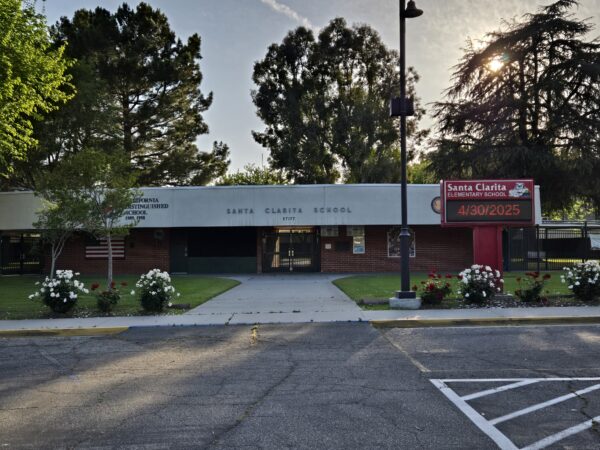
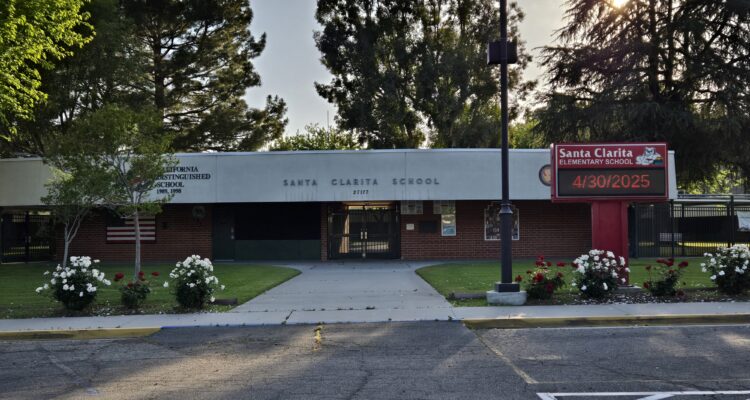
The architecture firm Smith, Powell & Morgridge designed Santa Clarita Elementary School in 1959. The school exemplifies the Mid-Century Modern style and stands out for its distinctive circular plan. As one of Santa Clarita’s longest-running elementary schools, it operated until its closure in 2024. Since then, local advocates have united to preserve the site’s significant architecture and adaptively reuse it as a community space.
The firm evolved from Marsh, Smith & Powell, which gained national recognition in the 1930s and 1940s for school designs that reflected new educational philosophies emphasizing functional site planning, child-centered classrooms, and strong indoor–outdoor connections (Los Angeles City Planning Department, 2014, 59). Following Marsh’s retirement in 1945, Morgridge joined Powell and Smith, and the firm operated as Smith, Powell & Morgridge from 1955 to 1966.
About This Place
About This Place
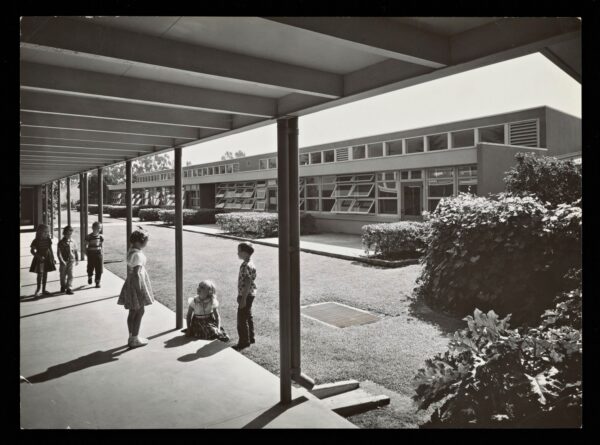
Originally known as Dry Creek Elementary School, Santa Clarita Elementary School is a Mid-Century Modern campus. The building’s distinguishing circular shape serves both form and function; the protected inner courtyard was intentionally designed to block children from the strong winds while allowing administrators to monitor activity. The low reinforced brick walls, flat gravel roof, overhangs, and steel frame flush-mounted windows – characteristic of the Modernist design – are remarkably intact.
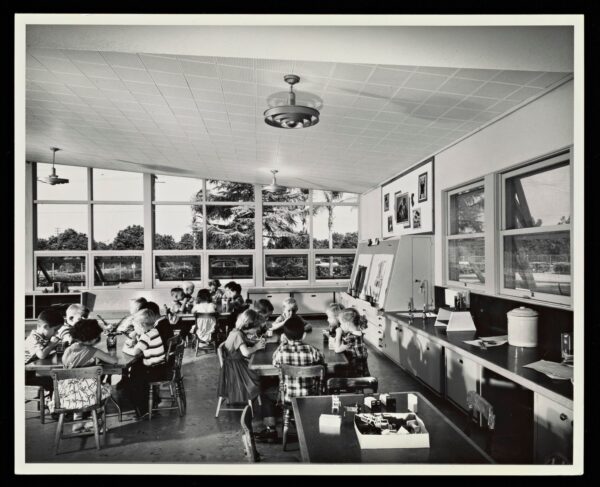
Expressive of postwar ideals in school design, the classrooms are organized around a central courtyard, with large multi-light windows reinforcing visual and physical connections between interior and exterior spaces. This configuration maximizes natural light and ventilation while encouraging informal interaction and shared use of space. The courtyard, visible from the classrooms, is central to the circulation pattern and is framed by mature heritage oaks and other tree species that reflect the site’s long use as a school and community space.
Our Position
Santa Clarita Elementary School is a rare example of Mid-Century Modern institutional development in Santa Clarita. It is a historically significant place with unique character defining features that should be identified and preserved.
We are supportive of the recommendations made by the Asset Management Advisory Committee convened by the Saugus Unified School District, which stress the reuse of the school building for civic or community uses.
A local advocacy group S.O.S. – Save Our School has been an important voice in the efforts to preserve the school, offering constructive solutions.