Place
Stoner House
Lost
The earliest example of Ray Kappe’s architecture in Long Beach has been cleared for demolition.
Place Details
Address
Architect
Neighborhood
Year
Style
Decade
Designation
Property Type
Community
Overview
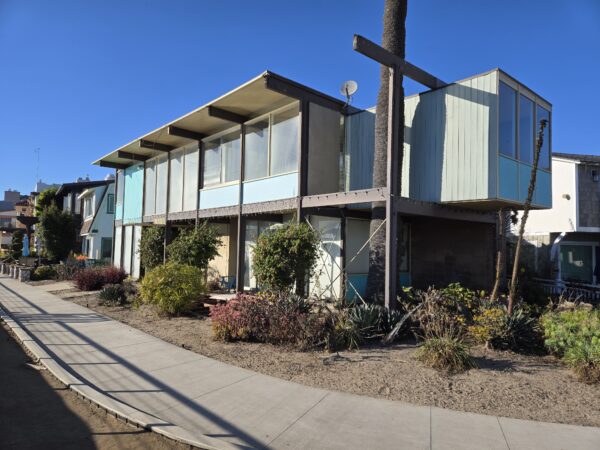
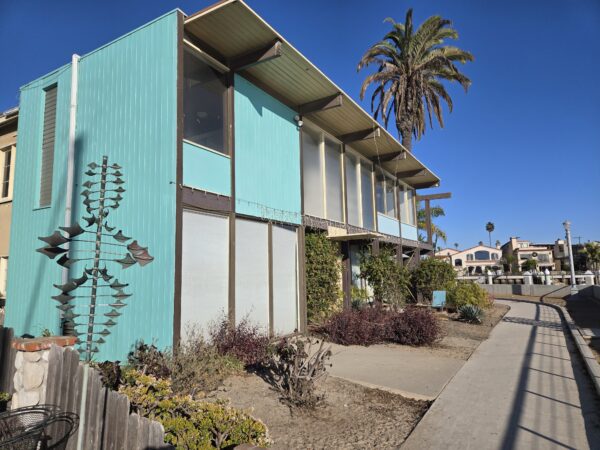
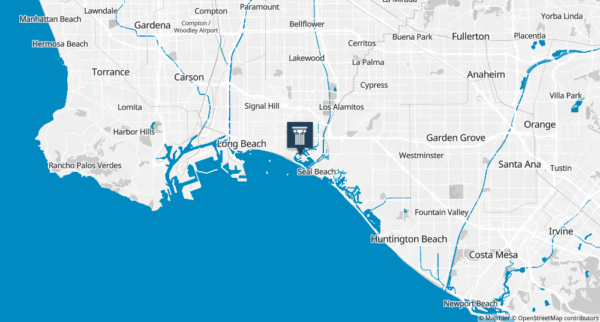
The experimental post-and-beam Stoner Residence, located in Long Beach’s Naples Island, has been cleared for demolition. Designed in 1956 by visionary architect Ray Kappe, the home is one of his earliest designs, showcasing his innovative use of light, open space, and connection to the environment—ideas that would shape his celebrated career and influence generations of architects through his founding role at SCI-Arc.
Despite it’s architectural importance, plans to demolish the Stoner House were approved, threatening to erase a vital piece of Long Beach’s modern architectural heritage and the story of Kappe’s pioneering work. In response, the Coalition to Save the Stoner House, made up of a trio of organizations including the Los Angeles Conservancy, Docomomo US/SoCal and Long Beach Heritage, has filed an appeal to reverse the demolition decision.
Unfortunately, the appeal was denied by Long Beach’s Planning Commission on December 18, 2025, allowing redevelopment of the site to move forward. We thank everyone who called or wrote in to support the preservation of the Stoner House.
About This Place
About This Place
Designed by renowned architect Ray Kappe in 1956, the Stoner House is a significant Modernist masterpiece that reflects Kappe’s innovative approach to architecture, blending structure, function, and site in a way that has inspired generations of architects.
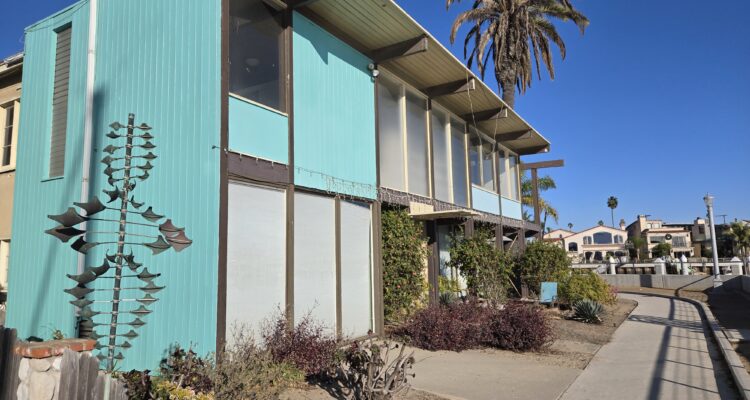
The visible front along the Corso di Napoli walkstreet is part of Kappe’s addition to an earlier two-story stucco house built in 1946. Rather than replacing the existing structure, Kappe’s design enhanced the previous architecture through an additive process, providing ample windows to make use of the waterfront view, creating an interior courtyard between the addition and the original building, and carving out the corner of the house to retain an existing palm.
The post-and-beam house is the earliest example of Kappe’s work in Long Beach, and is the only example of his work in the community prior to 1975. The home has been a cherished part of Long Beach’s Naples Island community for nearly seven decades, reflecting a unique chapter of the city’s rich architectural history. Its loss would be a devastating blow to Southern California’s architectural heritage and Long Beach’s cultural identity.
Our Position
The Coalition to Save the Stoner House, strongly objected to the proposed demolition of the Stoner House. To justify the demolition of the house, two fundamentally flawed historic assessment reports were commissioned by the owner that found the property ineligible for listing. The reports found the house ineligible for listing due to lack of significance and integrity.
The conclusions regarding significance are fatally flawed due to the limited and inappropriate lens used by the owner’s consultants. The Stoner House holds immense significance for three key reasons:
- The Stoner House is the earliest of only three known extant works by master architect Ray Kappe in the City of Long Beach. The two later residences have alterations and/or currently do not meet eligibility standards for the City of Long Beach due to the age of the property.
- The Stoner House was built at a critical point in Kappe’s career and is an excellent, well-documented example of his Modernist post-and-beam aesthetic. Because Kappe’s work is inherently site-specific, it is crucial to preserve multiple extant examples to gain a full and nuanced understanding of his broader body of work.
- The loss of this house would constitute irreparable harm to the Long Beach community and severely diminish the regional context for one of California’s most significant Modernist architects.
Integrity
Although the Historic Resource Assessment Reports cite integrity concerns, the property retains numerous character-defining features that clearly convey its significance, including overall massing, fenestration pattern, and many original materials. The claim that the home’s integrity has been compromised beyond eligibility is inaccurate.
Alterations identified in the report and relatively minor and reversible:
- All alterations on the primary façade are non-structural wood elements that can be restored.
- Similarly, the interior changes cited, such as the cabinet doors of an extant built-in below the fireplace, can be replaced with compatible materials.
- Other interior alterations, such as bathroom renovations and light fixtures, have a relatively minor impact on the overall integrity of the property.
The fundamental structural and spatial characteristics that exemplify Kappe’s design—the post-and-beam framing, seamless integration with the site, and distinct material palette—all remain intact.
Alternatives to Demolition
The Coalition recognizes the property owner’s desire to enlarge and modernize the residence to meet current needs. However, these goals can be achieved without demolishing a significant and rare work by Ray Kappe. The plan proposed would only modestly increase the inhabitable square footage of the property while losing a significant architectural contribution by Ray Kappe.
The Coalition sees the potential for other options such as sensitively expanding the original 1946 structure to accommodate the owners needs without compromising the integrity of Kappe’s work.