Place
Venice Lifeguard Station
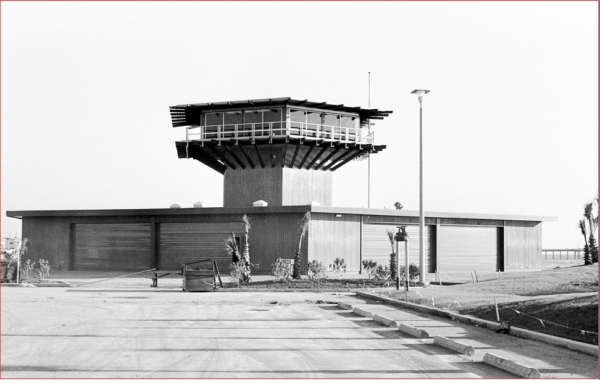
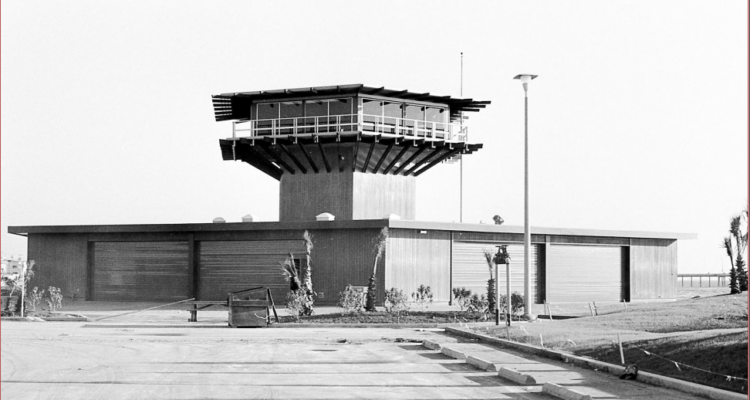
Built in 1969, this Mid-Century Modern building headquartered the L.A. City and later L.A. County lifeguard services who influenced safety and leisure on Venice beach.
Saved
In partnership with the Venice Neighborhood Council, we designated the Venice Lifeguard Station as a Historic-Cultural Monument in 2024.
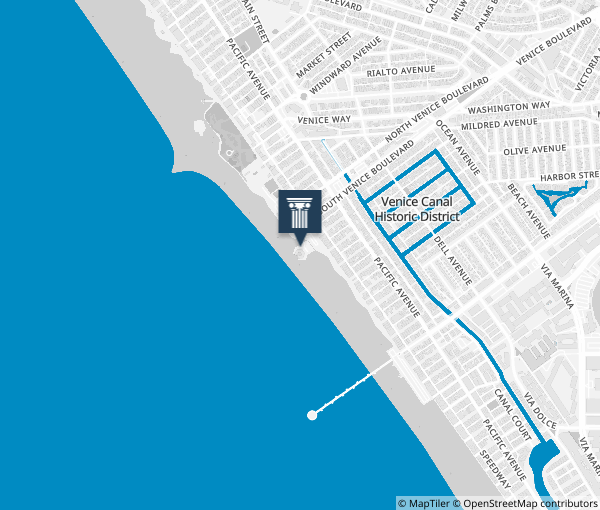
Place Details
Address
Architect
Year
Style
Decade
Property Type
Government Officials
Community
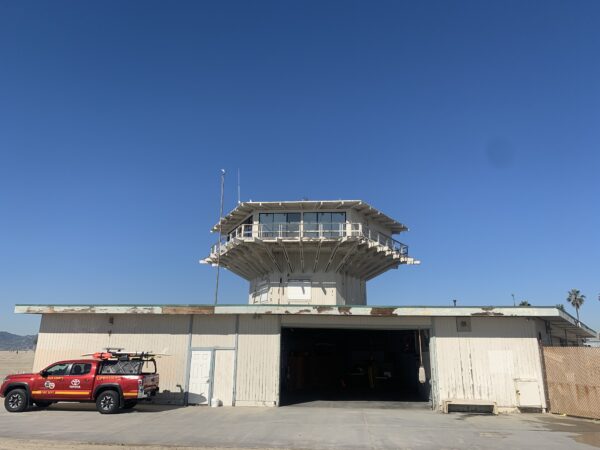
Venice Lifeguard Station, 2023 | Lindsay Mulcahy/ L.A. Conservancy
Overview
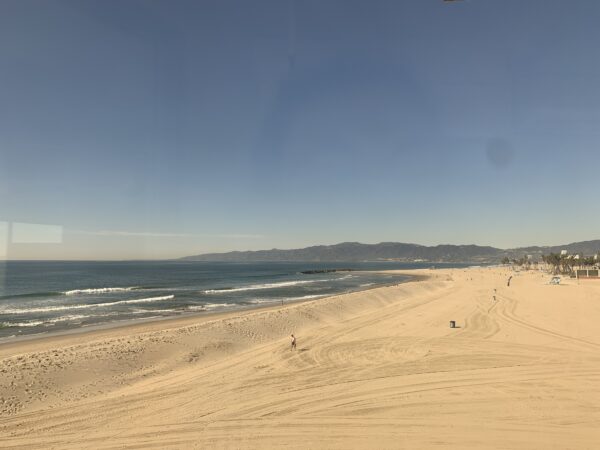
The Venice Lifeguard Station, with its hexagonal tower, is a landmark along the Venice Beach. The Mid-Century Modern building headquartered the L.A. City Lifeguard Service from 1969-1975, then the L.A. County Lifeguard Service until 2016.
The Lifeguard Station is owned by the City of L.A. and operated by L.A. County Department of Beaches and Harbors. The County recently submitted plans to demolish the top two stories, which spurred an outpouring of support for the building. The L.A. Conservancy submitted a Historic-Cultural Monument application in partnership with the Venice Neighborhood Council to protect this historic building.
About This Place
About This Place
From its construction in 1968 through 1975, the Venice Lifeguard Station served as the headquarters of the L.A. City Lifeguard Service. When the City and County consolidated services in 1975, the building became the L.A. County Lifeguard Headquarters. It anchored the County Lifeguard Service until 2015.
The Venice Station was the central administrative site during a formative period of growth and institutionalization in Los Angeles City and County’s lifeguard operations, one of the largest professional services in the world. While headquartered at the Venice Lifeguard Station, lifeguards have saved thousands of lives and profoundly shaped the leisure, recreation, and beach culture that defines Venice and Southern California.
The Station was designed by the Los Angeles-based architectural firm Prescott, Whalley, and Weit. The building is an excellent example of Mid-Century institutional development. It conveys essential character defining features of Mid-Century Modernism evident in the building’s direct expression of its post-and-beam structure and bold geometric hexagonal volumes. The distinctive third story hexagonal tower, with its low-pitched pyramidal roof, exposed eaves and rafters, steel flush-mounted floor-to-ceiling windows, and wraparound deck, demonstrates a high level of design and craftsmanship.
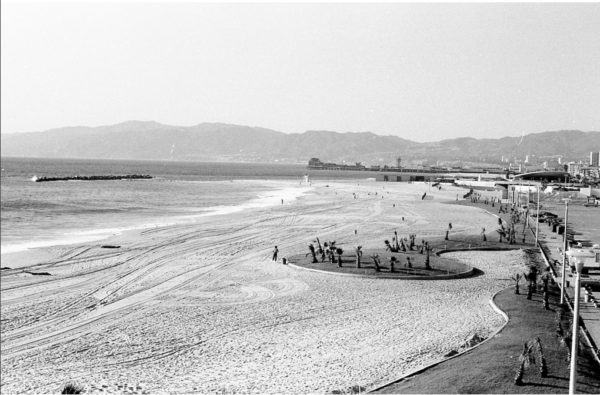
Original landscaping designed by the landscape architecture firm Cornell, Bridgers, and Troller is not extant.
Baywatch returns to Venice Beach
In late 2025, it was announced that the Venice Lifeguard Station will serve as a prominent film location in a Baywatch revival, which was awarded an enhanced 40% tax credit by the California Film Commission (CFC) under its Film & Television Tax Credit Program 4.0.
The production space for the show at the Lifeguard Station is contained entirely in a new structure that is physically removed from the existing building, preserving historic fabric in place. Termite abatement and repainting will be performed by the production crew. The film set is also designed to be semi-permanent, and can be easily disassembled, returning the historic Venice Lifeguard Station to its original condition.
Our Position
The Venice Lifeguard Station reveals the important contributions of Los Angeles lifeguards, not only in the county, but around the country and world. For over a century, Venice has been an incubator for the development of professional lifeguarding services and helped define Southern California’s beach culture.
Widespread support for this building, from both lifeguards and Venice residents, demonstrate the importance of this landmark to Angelinos today.
The Conservancy continues to push for proper maintenance of the building and supports compatible uses that will activate the space. In January 2026, we submitted a letter to the California Coastal Commission in support of the Baywatch production, which we believe will support ongoing maintenance needs.