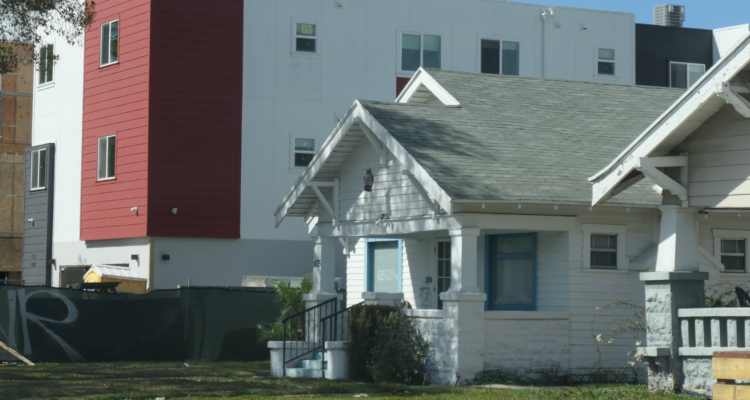
Objective Design Standards for Historic Preservation Overlay Zones
What are Objective Design Standards and why are they being proposed for Historic Preservation Overlay Zones?
Objective Design Standards are clear, measurable, and verifiable regulations that can be used to shape development projects. Some elements of Los Angeles’ zoning code are already objective, such as the maximum height limits, specified street setbacks, or regulations on fence heights. Others are subjective, for example: “new construction should complement the historic fabric.”
Over the past decade, California has passed numerous housing bills to encourage housing production. Many of these bills provide streamlined review for certain categories of housing projects that require only the conformance with existing objective design standards. While each Historic Preservation Overlay Zone (HPOZ) has an adopted Preservation Plan that has helped guide neighborhood changes, these plans are overwhelmingly subjective, and therefore provide little to no oversight of these types of streamlined projects.
What do Objective Design Standards mean for me?
If you live in an HPOZ, certain categories of projects will have to conform with the new Objective Design Standards. These include new multifamily homes built within the HPOZ, new mixed-use developments (for HPOZs with commercial corridors), and new Accessory Dwelling Units (ADUs). The proposed standard for each of these categories are slightly different.
Projects involving the expansion or alteration of existing contributing properties and even new single-family projects will still be reviewed pursuant to the existing preservation plans.
Background
In 2025, the City’s Office of Historic Resources (OHR) was awarded a Southern California Association of Governments (SCAG) REAP 2.0 grant to create Objective Design Standards. In November 2025, Architectural Resources Group (ARG) was contracted as the consultant to focus on standards for new residential infill, mixed-used infill projects, and ADUs within HPOZs. The REAP 2.0 grant deadline for this project is December 2026.
At the 2026 Neighborhoods Conference, the first public workshop and listening session was held. This was followed by two virtual workshops in spring and summer. In June, the draft Objective Design Standards were released for review and comment.
As of August 2026, the Conservancy is working with stakeholders and the Office of Historic Resources to respond to and improve the draft Objective Design Standards.
The Conservancy is in agreement with the HPOZ stakeholders that the draft standards do not meet the goals of the effort. Our comment letter can be accessed here.
For more information on the Objective Design Standards, please consult the Frequently Asked Questions compiled by the Office of Historic Resources or view the public workshop presentation from June 2026.