Altadena Recovery
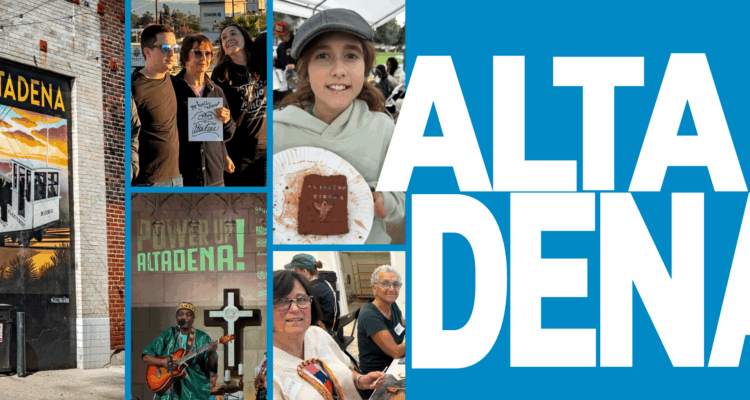
Wildfire Recovery
Altadena Recovery
Collaborating with Altadena communities on recovery efforts that honor and preserve local history and heritage after the devastating 2025 Eaton Fire.
Preservation is about people as much as places, and it often begins with a simple question: what stories live here, and whose are they? In Altadena, that question has guided our work and those of local partners—first in response to the January 2025 Eaton Fire, and now as a broader effort to ensure this unique community is fully acknowledged, documented, and celebrated for its remarkable heritage.
The process of uncovering those stories often starts with a historic resources survey, the foundation for understanding a community’s architectural and cultural heritage. Conducted block by block and building by building, surveys identify and record properties that contribute to a community’s sense of history—ranging from landmark façades and postwar storefronts to modest homes that speak to social change. A well-designed survey doesn’t just catalog what exists; it creates a baseline for what’s important, significant, and what deserves careful stewardship.
Behind every survey stands the guiding framework of a historic context statement. This document weaves together the historical, architectural, and cultural forces that shaped development over time—explaining why certain building types, styles, or patterns matter. Context statements transform raw data into meaning. They clarify themes—such as postwar suburbanization, civic growth, or the rise of neighborhoods defined by cultural identity—and place individual resources within those larger narratives. As a result, preservation planning moves beyond individual landmarks and toward a deeper understanding of community growth and development.
Layered on top of these tools is Cultural Asset Mapping, an increasingly collaborative and community-driven process that expands what is considered heritage. Cultural asset maps illuminate the living dimension of heritage: gathering places, local businesses, art, and traditions that may not meet the threshold for architectural significance but are deeply valued by residents and the larger community. This approach blends spatial analysis with storytelling, helping communities visualize both tangible and intangible heritage across geography and time.
Together, these methods form a broad picture of place. Surveys supply the documentation, context statements reveal meaning, and cultural asset mapping makes room for the community to take the lead in defining what makes their neighborhood special. Combined, these tools can help empower communities—not just to preserve buildings, but to sustain memory, identity, and a shared sense of belonging and what about Altadena is important and should be kept.
The community of Altadena was particularly impacted by the 2025 Eaton Fire, with roughly half of its buildings and structures destroyed, including numerous significant historic buildings and landscapes. As debris is cleared and rebuilding efforts begin, Altadena’s remaining heritage resources are critical touchstones for returning community members.
Never before has Los Angeles County seen such an erasure of historic places and entire neighborhoods of cultural significance, like that of Altadena during the 2025 Eaton Fire.
The Los Angeles Conservancy is collaborating with local partners and community members to support recovery efforts that honor and preserve Altadena’s history and heritage. Learn more about our work in Altadena below.
Honoring Altadena’s Heritage and Resilience

DOCUMENTING THE COMMUNITY'S HISTORIC PLACES
Altadena Historic Resources Survey & Historic Context Statement
Developing a community-wide Historic Resources Survey to document historic places in Altadena, and a Historic Context Statement, will help tell the stories about them. Together, this projects will help guide rebuilding and future planning efforts with a greater understanding of existing historic places.

MAPPING ALTADENA'S CULTURAL IDENTITY
Cultural Asset Mapping
Mapping Altadena’s cultural assets, including but not limited to important gathering places, local businesses, oral histories, art, and traditions that capture what residents value most – and want to ensure remain as part of any rebuilding effort. These insights will map Altadena’s cultural heartbeat and help recovery efforts reflect the heritage of this tight-knit community.

PAYING TRIBUTE TO THE VOICES OF ALTADENA
Artists at Work Residency
With local artist, Alma Cielo, we’re partnering as part of the Artists at Work program and Los Angeles County Arts and Culture to create a public work shaped by the hands of those impacted by the Eaton Fire. Through shared stories and creative collaboration, this public mosaic will uplift the collective memory and resilience of all Altadenans.

SHARE YOUR STORIES
Share Your Altadena
We invite you to share stories about Altadena! You may also contribute photographs or other historical information. All submitted material will be reviewed by the Project Team.
DOCUMENTING THE COMMUNITY'S HISTORIC PLACES
Altadena Historic Resources Survey & Historic Context Statement
Developing a community-wide Historic Resources Survey to document historic places in Altadena, and a Historic Context Statement, will help tell the stories about them. Together, this projects will help guide rebuilding and future planning efforts with a greater understanding of existing historic places.
MAPPING ALTADENA'S CULTURAL IDENTITY
Cultural Asset Mapping
Mapping Altadena’s cultural assets, including but not limited to important gathering places, local businesses, oral histories, art, and traditions that capture what residents value most – and want to ensure remain as part of any rebuilding effort. These insights will map Altadena’s cultural heartbeat and help recovery efforts reflect the heritage of this tight-knit community.
PAYING TRIBUTE TO THE VOICES OF ALTADENA
Artists at Work Residency
With local artist, Alma Cielo, we’re partnering as part of the Artists at Work program and Los Angeles County Arts and Culture to create a public work shaped by the hands of those impacted by the Eaton Fire. Through shared stories and creative collaboration, this public mosaic will uplift the collective memory and resilience of all Altadenans.
SHARE YOUR STORIES
Share Your Altadena
We invite you to share stories about Altadena! You may also contribute photographs or other historical information. All submitted material will be reviewed by the Project Team.
Learn more about our fire recovery and rebuilding efforts.

Announcement
Transformational $1.5 Million Grant to Support Altadena Cultural Asset Mapping Project
March 5, 2026
Community Launch Event
Altadena Historic Resources Survey and Historic Context Statement
Saturday, February 28, 2026
2–4 p.m.

ANNOUNCEMENT
Getty Grant to L.A. Conservancy Will Help Altadena Map Its Heritage

Announcement
L.A. Conservancy Selected for WPA-Inspired "Artists at Work" Program
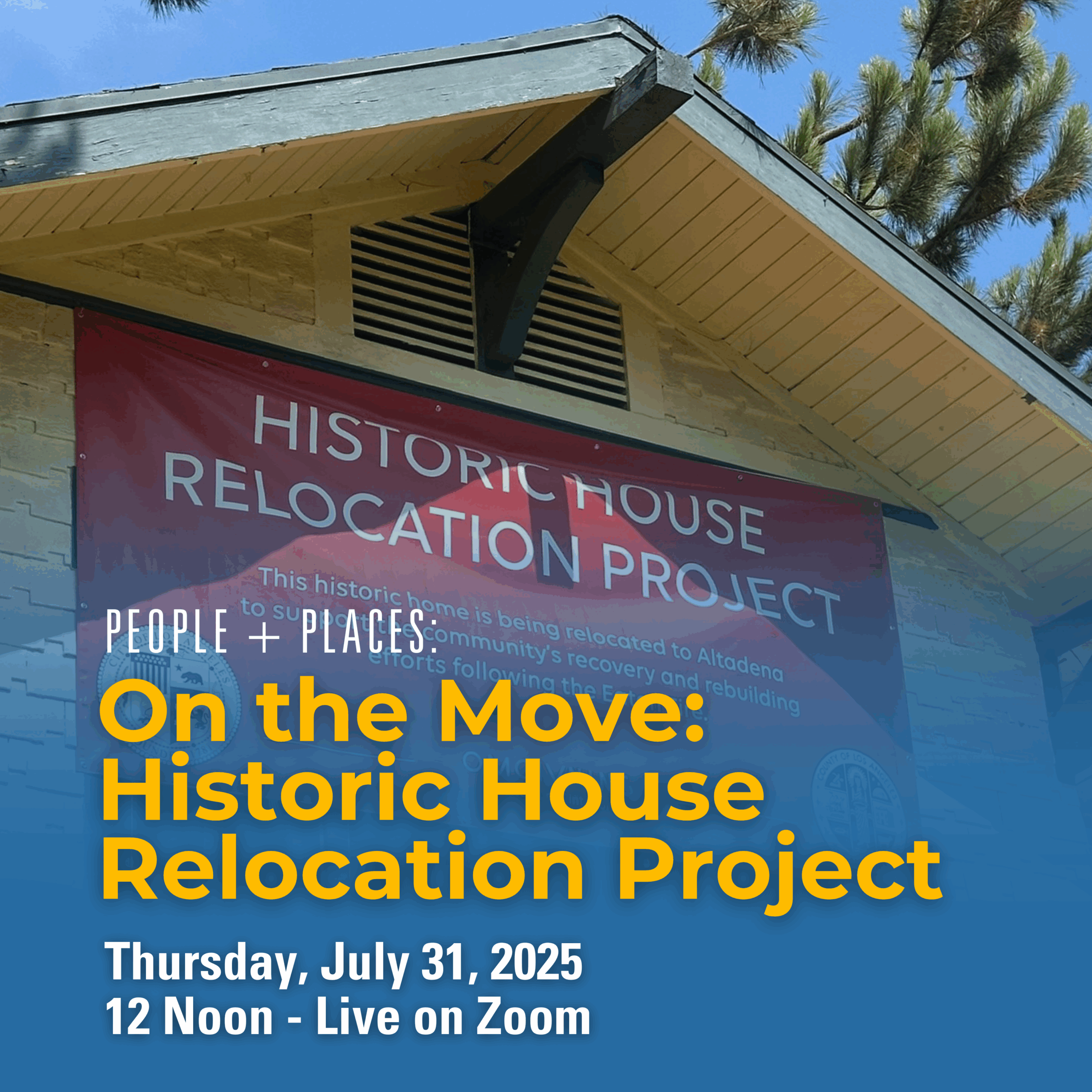
VIRTUAL PROGRAM RECORDING
On the Move: Historic House Relocation Project

VIRTUAL PROGRAM RECORDING
Altadena: After the Fire and Moving Forward

Wildfire Response
2025 Fire Impact Mapping Initiative

Announcement
World Monuments Fund and Los Angeles Conservancy Join Forces to Support to Support Recovery Following Wildfires

Active Advocacy Issue
Recovery and Rebuilding After Historic L.A. Wildfires
Announcement
Transformational $1.5 Million Grant to Support Altadena Cultural Asset Mapping Project
March 5, 2026
Community Launch Event
Altadena Historic Resources Survey and Historic Context Statement
Saturday, February 28, 2026
2–4 p.m.
ANNOUNCEMENT
Getty Grant to L.A. Conservancy Will Help Altadena Map Its Heritage
Announcement
L.A. Conservancy Selected for WPA-Inspired "Artists at Work" Program
VIRTUAL PROGRAM RECORDING
On the Move: Historic House Relocation Project
VIRTUAL PROGRAM RECORDING
Altadena: After the Fire and Moving Forward
Wildfire Response
2025 Fire Impact Mapping Initiative
Announcement
World Monuments Fund and Los Angeles Conservancy Join Forces to Support to Support Recovery Following Wildfires
Active Advocacy Issue
Recovery and Rebuilding After Historic L.A. Wildfires
Thank you to our partners in this important work.