Nominating the University High School Administration Building

Blog
For the Community, By the Community: Nominating the University High School Administration Building
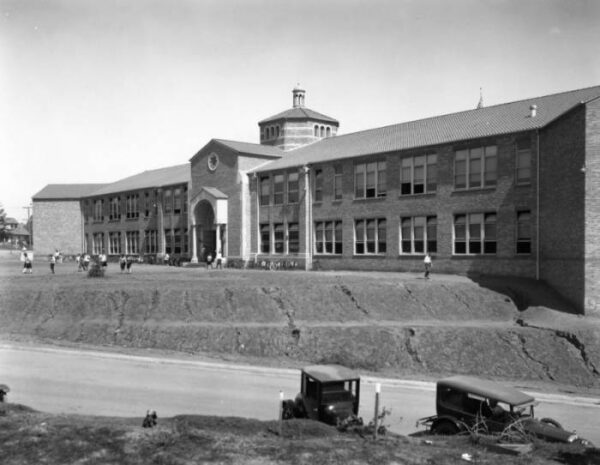
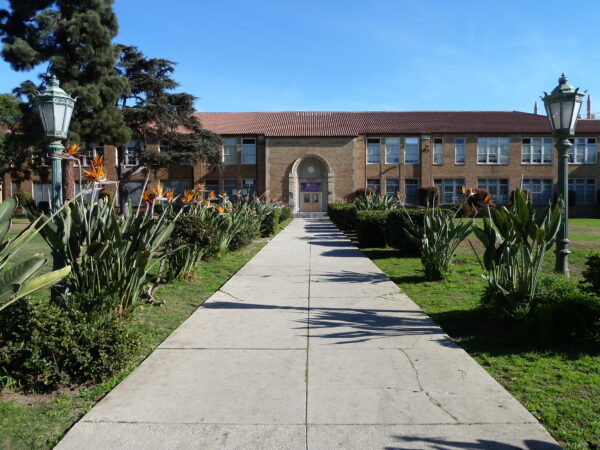
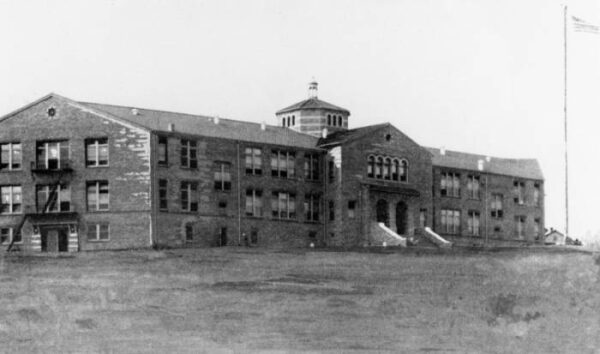
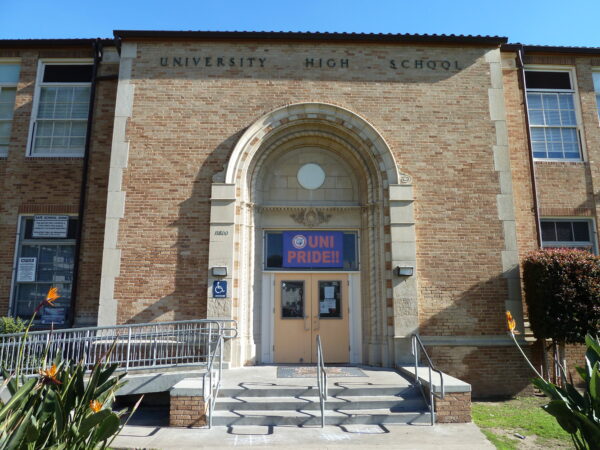
University High School, lovingly referred to as “Uni”, is an over 100-year-old public high school in the Sawtelle neighborhood of Los Angeles. Designed by architecture firm Russell & Alpaugh in the Romanesque Revival and Renaissance Revival styles, the school’s historic Administration Building is the only surviving building of the original 1920s campus.
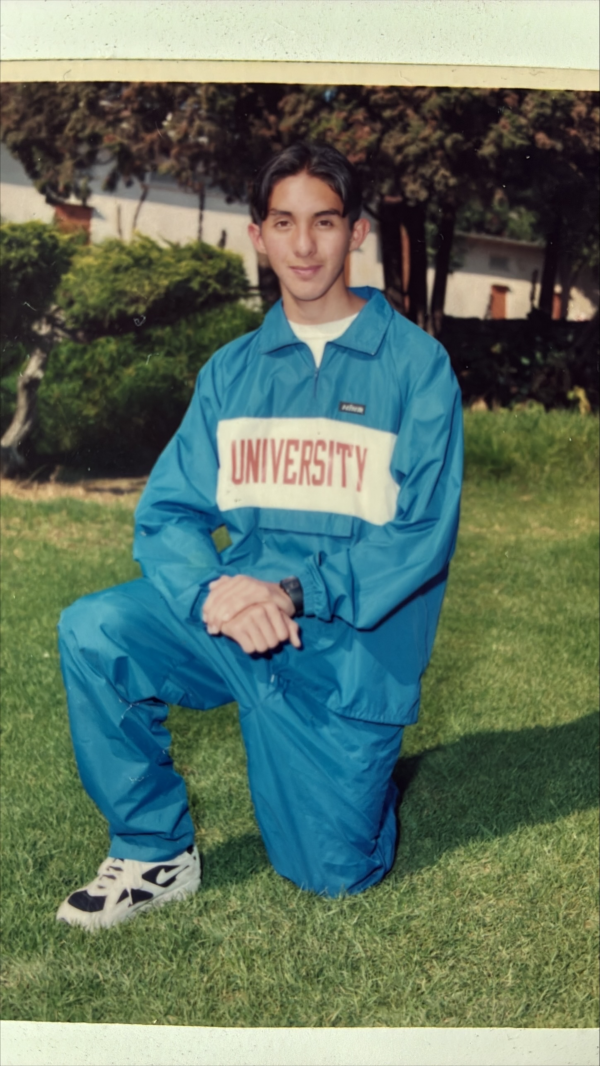
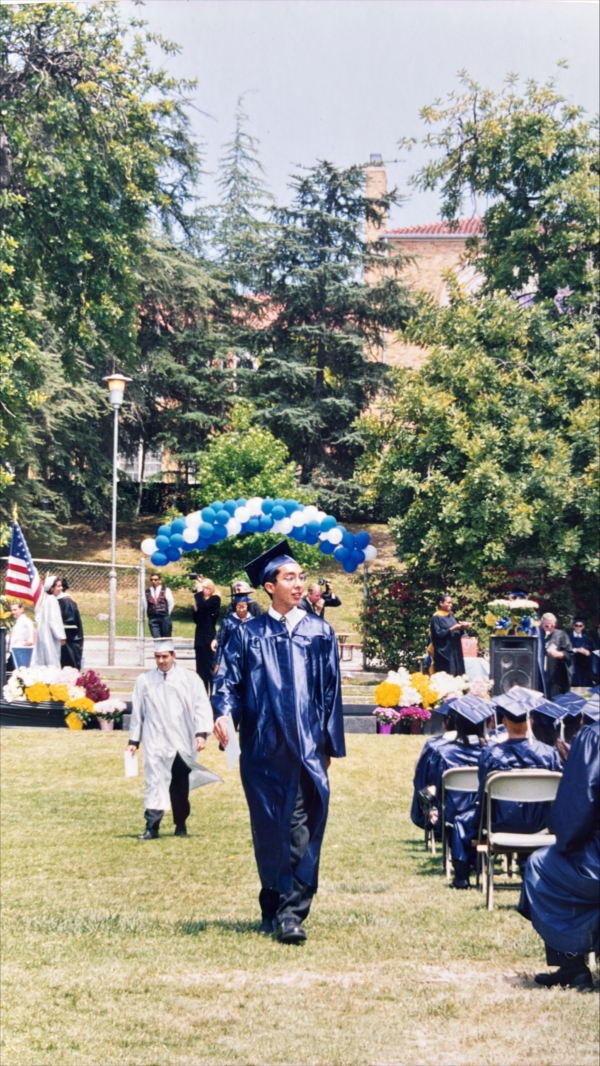
As the school was approaching its centennial in 2024, an alumnus of the high school, Alejandro Huerta, decided it was time to do something he’d been considering since graduating from Uni—getting the Administration Building designated as a landmark. Alejandro started the nomination process in 2022, and the University High School Administration Building was officially listed on the National Register of Historic Places in July 2025. We spoke with Alejandro about the significance of the building and school, its Japanese American heritage, the importance of community-led preservation, and lessons learned along the way.
Hello, Alejandro! First, could you tell us a bit about yourself, your background, and what led you to nominating Uni’s Administration Building?
I went to Uni and graduated in 1998. After getting a bachelor’s degree in Urban Studies with a concentration in Urban Design at Stanford, I went to the University of Virginia’s School of Architecture for a Master’s in Architectural History. Even in college as an undergraduate, I started thinking about nominating my high school’s Administration Building. I did some initial research in college but never made any real movement on it. After completing my studies, I pivoted to a career in planning, working in comprehensive planning and then specializing in environmental planning. So broadly speaking, I’ve always been interested in the built environment and architectural history. I work in the affordable housing industry now, but I’ve always followed preservation efforts through my friends and colleagues. Many years after that early research in college, I realized the 100-year anniversary of Uni was coming up in 2024; the school opened in 1924. It felt like the right time for the nomination, so I began the work in 2022.
Funny enough, years prior in the early 2000s, the University High School Education Foundation had been digging through old files in the Administration Building’s basement, and they miraculously found the original set of blueprints for the school. They put a call out through their newsletter at the time, like “hey, we found these blueprints. They’re in pretty bad shape. Does anyone have any ideas on how to preserve them or what to do with them?” I got news of that and contacted the UCLA Library Special Collections. I asked if we could transfer the blueprints there, and they said let’s do it. I worked pretty closely with the Special Collections staff and thankfully, they were more than willing to go to the school, pick up the blueprints, transfer, and catalog them. The blueprints are now housed at the UCLA Library Special Collections on UCLA’s campus. It ended up being a full circle moment because I went to the Special Collections archives as part of the nomination process to look at the blueprints, and it was my first time really spending time with them. Being able to handle them and study them in the Special Collections reading room felt like a perfect way to utilize these historic blueprints for the nomination. From first thinking about this nomination in college to then submitting the nomination 20 years later, this process has truly been years in the making.
You mentioned that even in college, you had the idea of nominating the building. When did you realize its significance? How did this idea come about for you?
I went to Uni. All my older siblings went to Uni. My parents immigrated from Mexico and landed in West L.A. in 1972, and my dad’s whole side of the family and all my cousins went to Uni. So, before I recognized its architectural significance or any other significance, I always recognized its significance within the community and understood it as a place that provided community for West L.A. It’s a place people call home, a place that generations of families went to, teachers were there for generations of students, and specifically as a Latino, I was always looking at it from that multi-generational, cultural, communal point of view.
Flash forward to 2022, you started working on the nomination. Can you talk about your early research and how you started to piece this nomination together?
As I began my research in 2022, what captivated me was that central idea of how it’s been a community center. Who did it serve? What ethnic groups? And broadening my research to not only the students that the school served, but the neighborhood, local community, and specifically the Japanese American population.
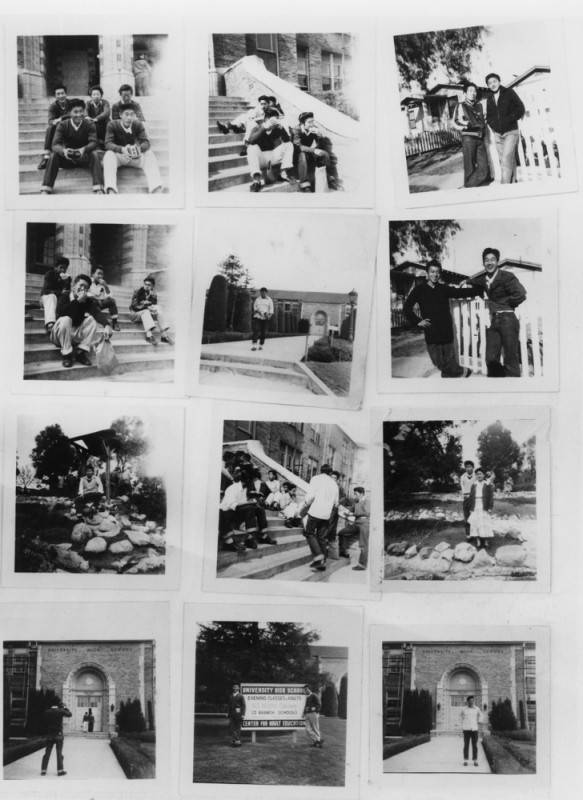
Having grown up in West L.A. and going to Uni myself, I always knew there was significant Japanese American history that was important to our local history, but I hadn’t really dug into it prior to the nomination. The more I researched and uncovered, the more I realized University High School was very intimately connected to the development of what was then Sawtelle, its own community that was eventually annexed into the City of Los Angeles. As I read about that local history, it became very apparent that Sawtelle was an early Japantown. A lot of factors surrounding the school drew Japanese immigrants and Japanese Americans to the area, and eventually those families started sending their children to University High School. It almost became an ethnography in some ways, bringing together the history of Sawtelle, West L.A., the Japanese American community, and the school.
I looked at old yearbooks from the ‘20s, and it opened up a whole layer of history that I hadn’t seen before. From these yearbooks, it was clear there was a strong Japanese American student body at the high school as early as the late 1920s that continued through World War II. As I continued to explore yearbooks, I also discovered that many of those students were forcibly removed during World War II. The more I researched, the clearer it was that these students were pulled from Uni and sent to incarceration camps. One student featured in the nomination actively wrote about being incarcerated, their disruption in education from University High School, and what they planned to do post-World War II. Eventually, after the war ended, Japanese Americans returned to the school and strong Japanese American social clubs and youth groups formed through the campus, which were an important part of the next generation of Japanese American students at Uni.
Another area of significance was the impact of the 1933 Long Beach earthquake on Los Angeles schools. After the earthquake, a lot of schools were either demolished or dramatically altered, but University High School’s Administration Building survived the disaster, was repaired and reinforced, and is one of very few school buildings whose architectural style was not significantly altered in the repair process. It’s incredible that the building is still standing today, and it also serves as a record of that period and the ensuing reconstruction efforts from LAUSD to strengthen school buildings.
Were there any challenges that you came up against in the nomination process? How did you overcome these challenges?
First, I want to say that this was really community-driven work. The community played a huge role in nominating the building and at our Office of Historic Preservation (OHP) hearing, several of the commissioners mentioned its significance to the community. Los Angeles Unified School District (LAUSD) also wrote a letter of support for the nomination, which was a huge win.
As mentioned, I had been thinking of nominating the building for quite a while but had never written a nomination before. As I began the process, I started contacting people with experience for guidance. At the state level, people at the Office of Historic Preservation encouraged me and gave tips on how to look at the context for the nomination. I looked at two LAUSD schools that had been nominated and listed on the National Register, Hollywood High School and the Old Farmdale Schoolhouse in El Sereno, which was a community driven effort. On the local level, Adrian [Scott Fine] at the Conservancy was really helpful. He gave me some initial guidance and shared challenges in past nominations for LAUSD schools, but he also really encouraged me to think big about the nomination and the broader context of the school within the community.
Another challenge I came up against during the research process was discovering that a lot of primary source material is gone or missing. For example, the early history of Sawtelle was researched, but the primary source material was gone. The L.A. Times had reported on Chamber of Commerce meetings, but the Chamber’s papers and records had been lost to time. The architectural partnership of Russell & Alpaugh had dissolved, and they might have thrown away important correspondence because of that. There were histories that were more challenging to piece together. I ended up relying on letters from the school’s first principal and L.A. Times articles that stitched together some of these missing pieces. It’s really about doing your due diligence in the research process.
Last question. What advice would you give to someone else who might want to start this process for a place that’s meaningful to their community?
My resounding piece of advice would be to talk to members of your community, local advocates, and other communities who have done something similar in their communities. For someone like myself who’s never done this before, that community perspective was extremely helpful. Once I talked to people who had already done it, like the El Sereno Historical Society, who led efforts to designate the Old Farmdale Schoolhouse, it became clear this was something that I could also do for my community. It went from an abstract idea to a very tangible one. The designation of the Old Farmdale Schoolhouse was such a source of pride for their community. Realizing that Uni High alumni and teachers would get to have that same experience provided me with the energy and fuel to pursue this process. Talking to experienced advocacy organizations like the Conservancy and getting their perspective and guidance was also invaluable. Adrian, Andrew [Salimian] and everyone at the Conservancy was extremely helpful, and the Conservancy wrote a letter of support. I also spoke to the local neighborhood council, West Los Angeles Sawtelle Neighborhood Council. They discussed the nomination at one of their meetings and also wrote a support letter. The nomination was really important to them as well, because one of their missions is to continue sharing the neighborhood’s history and Japanese American history. Lean into your community resources and keep the community front and center in the process.
You can read the approved nomination for the University High School Administration Building in full HERE.