Place
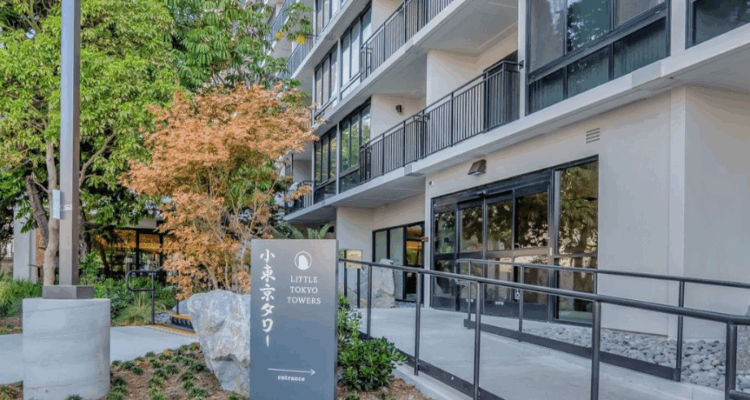
Little Tokyo Towers
Uniting preservation, seismic resilience, and financial innovation, this project ensures long-term housing stability for local seniors and the entire community.

Place Details
Address
Year
Style
Decade
Designation
Property Type
Attributes
Little Tokyo Towers has been a vital part of the Little Tokyo neighborhood and an essential component of Los Angeles’ senior affordable housing network since its construction in 1975. It emerged from a remarkable collaboration among members of the Little Tokyo community and four key community organizations—the Southern California Gardeners’ Federation, the Japanese American Citizens League Pacific Southwest District, the Japanese Christian Church Federation, and the Los Angeles Buddhist Temple Federation. These groups came together out of a shared commitment to protect their community and ensure that seniors could remain rooted in the cultural and social fabric of the community.
The rehabilitation of Little Tokyo Towers was driven in part by the City of Los Angeles’ 2018 seismic retrofit mandate, requiring many aging buildings undergo structural evaluation and reinforcement. For the Little Tokyo Towers board, the city mandate presented both a necessity and an opportunity: to bring the structure up to modern seismic standards while revitalizing aging building systems, addressing deferred maintenance, and modernizing the building for current and future residents.
As part of the rehabilitation project, 55 additional years of affordability were secured to prevent affordable senior housing from converting to market-rate housing. The project also spurred the creation of the Little Tokyo Towers Community Foundation to steward 50 years of equity proceeds in the building back into the Little Tokyo community. The Little Tokyo Towers Foundation has, to date, played a significant role in safeguarding Little Tokyo by providing critical financial support to projects aimed at preventing displacement caused by gentrification and fostering the resilience of legacy businesses. One of the Foundation’s most notable contributions was the provision of $8 million in gap funding for the First Street North project, an affordable mixed-use development currently approaching completion in partnership with the Little Tokyo Service Center.
The project’s overall rehabilitation vision was rooted in preservation. The goal was not to change the fundamental character or mission of the building, but rather to safeguard it, improve it, and preserve a part of the community so its community elders could continue living there comfortably and safely. The project included a complete seismic retrofit using Fiber Reinforced Polymer, a new, innovative construction technique selected because other traditional methods would have significantly reduced the size of individual apartment homes and impacted the residents’ quality of life. Additional improvements to the building’s health and safety systems included replacing old water heaters with energy-efficient cyclonic water heaters, providing an energy-efficient cool roof, and modernizing the elevator machinery and cab interiors.
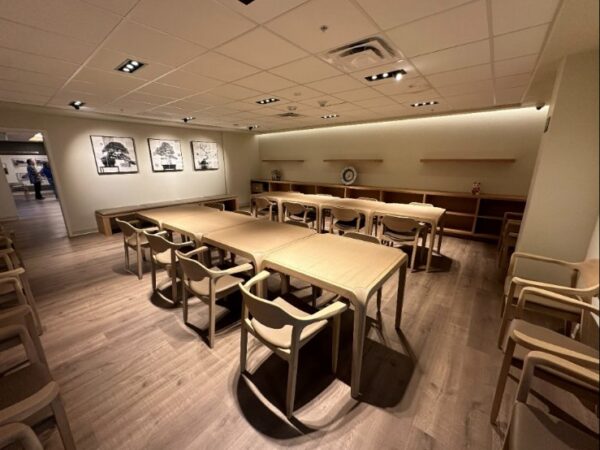
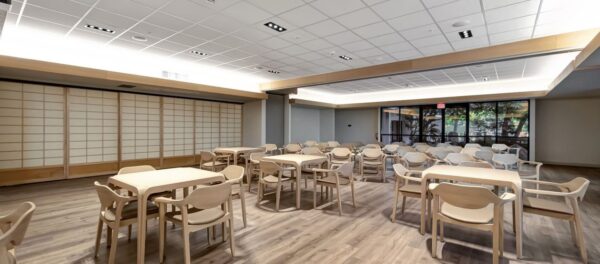
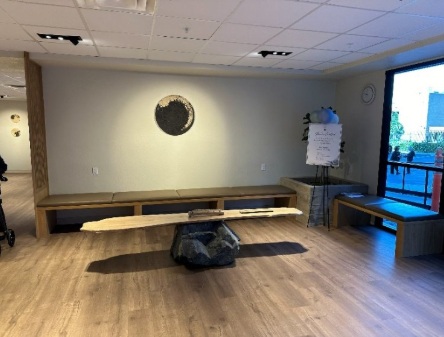
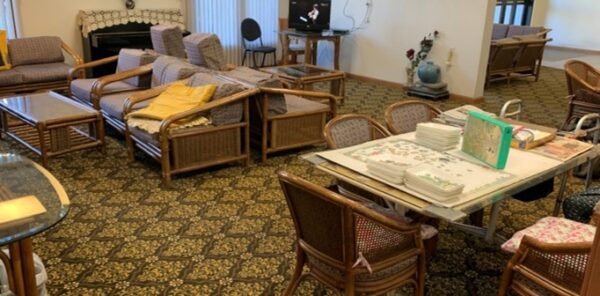
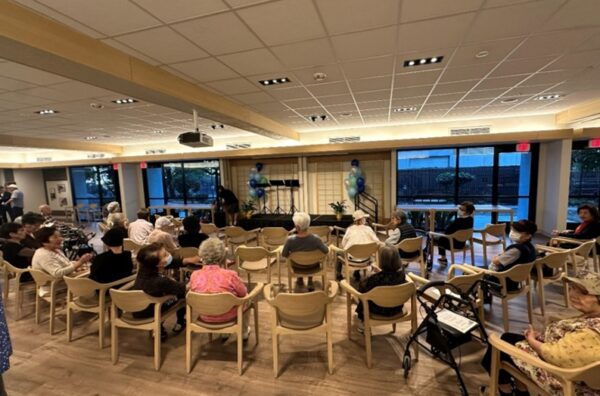
Significant upgrades were made to the apartment unit interiors and kitchens, including adding floor-to-ceiling windows and expanding livable space within the unit. Increasing the square feet of livable area was achieved by building out the bedroom balcony into livable space, which increased the size of the bedroom by six feet. Updates were made to the building exterior, lighting, signage and parking lot. RAHD Group also modernized the community recreation room space, dining hall, library/computer room, laundry room, community kitchen space, and management office. The design of the first-floor spaces and community amenities was thoughtfully updated to enhance residents’ everyday life while paying homage to the building’s original design.
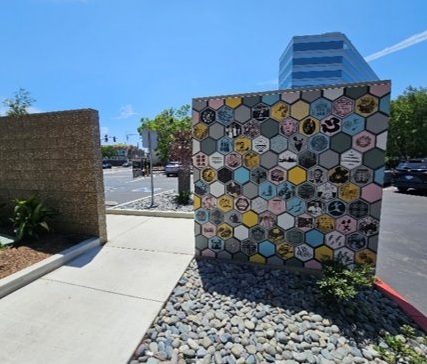
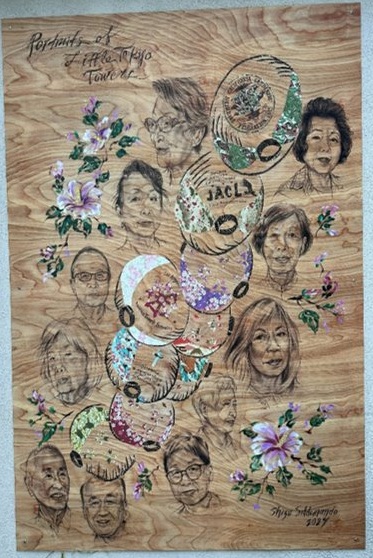
New landscaping with native plants was also incorporated to create an inviting outdoor environment for residents, that not only rehabilitated but enhanced the existing Japanese garden landscaping. Landscaping and signage were designed with an eye towards the Japanese American context of the neighborhood, bringing visual and cultural continuity to the adjacent community venues and spaces. Two artists were commissioned to create public art installations of cultural significance—Artist Nancy Uyemura created a piece that greets visitors to the Towers as you near the Towers entrance while Artist Shizu Saldamando created a mural that is affixed next to the entrance of the multipurpose room. These works memorialize the community’s history and celebrate the cultural fabric that has defined Little Tokyo for generations.
Throughout the project, the focus remained on preserving the building’s long-standing role in the community while enhancing safety, livability, and long-term affordability. The result was a rehabilitation that honored the original vision for Little Tokyo Towers while preparing it to continue serving seniors far into the future.
Project Lead/Owner: Little Tokyo Towers, Inc.
Developer: RAHD Group
Architect: Basis Architecture and Consulting
Structural Engineer: Tuan and Robinson Structural Engineers
Mechanical/Plumbing/Electrical Engineer: AME Design Group
Civil Engineer: Kimley-Horn
Landscape Architect: Kimley-Horn
Contractor: ICON National
Construction Manager: Alliant Construction Management
Ground floor design consultant: OWIU Design
Artwork- photography: Toyo Miyatake Studio
Artwork- mural: Shizu Saldamando
Artwork- entryway: Nancy Uyemura
Property Management: Royal Property Management Group
Financing: RAHD Group Finance Team